
Recursive and Iterative Queries
**In this Video: **
- **We will demonstrate the difference between recursive and iterative queries. **
- **Discuss the reasons why you may want to disable recursive queries. **
- **Discuss the effects of disabling recursion. **
- **Demonstrate how to disable recursive queries **
**What is a Recursive Query? **
- A recursive query is one where the DNS server will take responsibility for a full answer (name resolution) to a query or give an error.
- A server that sends a recursive query will contact other servers to attempt to resolve that query.
**What is an Iterative Query? **
- An iterative query is a query in which the DNS server responds with the best information (a referral) that it has either from its zone files or its cache.
- A server that sends an iterative query does not attempt to contact other DNS servers for an answer to obtain a result.
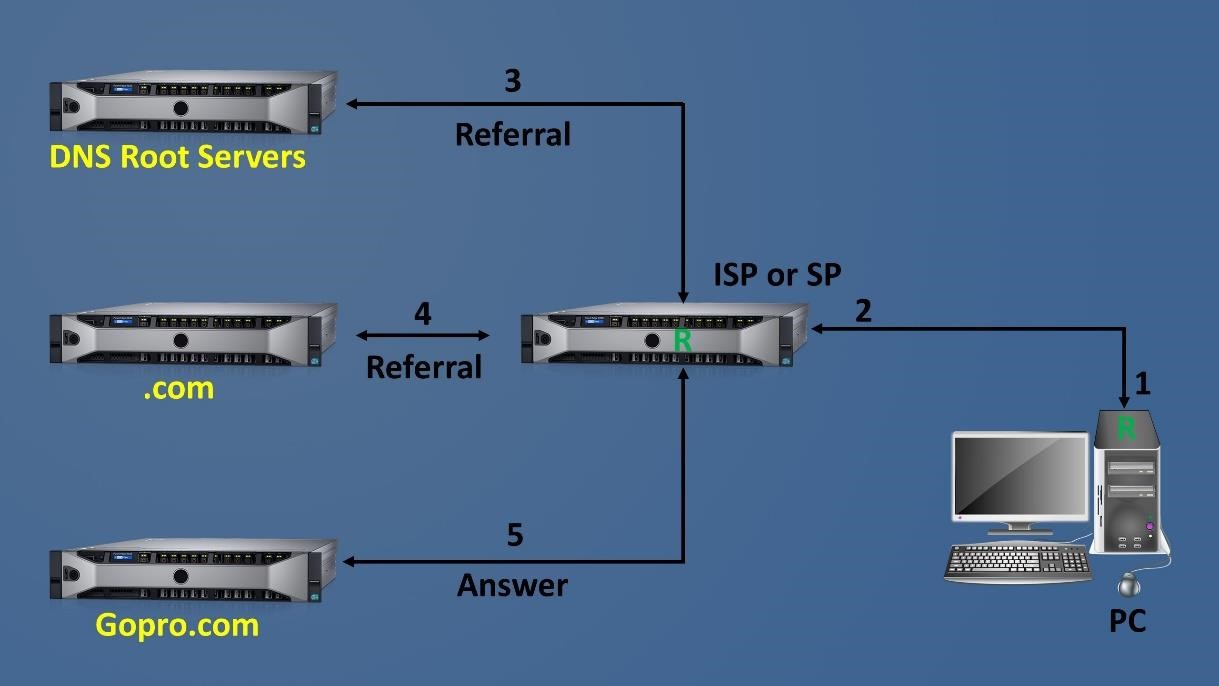
**Here is an example of a recursive and an iterative query. **
-
A DNS resolver (R) is indicated from the PC. The user has typed in the host name gopro.com into their computers browser. The browser checks the local cache (1) to see if the IP address of gopro.com is in the computer’s memory, it is not. The resolver sends a recursive query (2) for the IP address of gopro.com to the ISP’s DNS server. ISP DNS server looks up the address of gopro.com in its cache, and does not find it. If it would have found it, it would have returned the query back to the PC and the transaction would have been complete.
-
The ISP’s DNS resolver (R) sends an iterative query (3) to the root hints servers. Every DNS server has a root hints file. This file contains the host names and IP addresses of the root servers on the internet.
-
An iterative query is different than a recursive query. An iterative query works like this. If the DNS se…
No comments yet. Add the first comment to start the discussion.